Top Telegram mini apps in 2026
In 2026, Telegram is no longer just a messaging app. With more than a billion users, it has become one of the largest onboarding funnels in crypto, and The Open Network (TON) is the chain that powers it. Telegram Mini Apps, small web apps that open directly inside a chat, have already pulled hundreds of millions of people into games, wallets, and financial tools without a single app store download.
For developers, that is the opportunity and the challenge. Distribution is effectively solved: a good Mini App can reach millions through referrals and the Telegram attachment menu. What separates the apps that keep those users from the ones that lose them is execution, especially at the moments where a user connects a wallet, signs in, or moves money.
This article looks at seven of the most successful Telegram Mini Apps built on TON, what each one got right, and the practical lessons a developer can take into their own build.
What are Telegram Mini Apps on TON?
Telegram Mini Apps are lightweight applications that run inside Telegram itself, with no download or external browser required. They are built with standard web technology (HTML5 and JavaScript) and behave like fast mobile web apps embedded in the Telegram interface. Users find them through search, bot commands, shared links, or the attachment menu, and launch them in a single tap.
Built on TON, these apps go well beyond simple chat bots. TON provides native wallet support, real-time transactions, and token ownership, which lets a Mini App function as a full decentralized application (dApp) while feeling as frictionless as sending a message. A user can play a game, connect a TON wallet like Tonkeeper or the built-in Telegram Wallet, swap tokens, or claim rewards without ever leaving the conversation.
To learn more about building telegram mini apps with Reown, check out the full guide here →
Why are Telegram Mini Apps important?
Telegram Mini Apps matter because they collapse the distance between "never used crypto" and "holds an onchain asset" into a few taps. That has three consequences developers should care about.
First, distribution happens where users already are. Instead of fighting for installs in a crowded app store, a Mini App spreads through the chats, groups, and referral loops people use every day. TON Mini Apps now reach an estimated 500 million-plus monthly users inside Telegram, a scale most standalone apps never touch.
Second, the format proves that Web3 does not need Web3-native users. Games like Notcoin and Hamster Kombat onboarded people who had never held a token, using mechanics as simple as tapping. The blockchain was present but invisible, which is exactly how mainstream adoption tends to work.
Third, TON has matured into real financial infrastructure. As of 2025 the network supported over 650 dApps and more than 200 ecosystem tokens, with DeFi total value locked passing $150 million. Tether's USDT supply on TON grew past 1.43 billion tokens, giving Mini Apps a stable asset for payments and remittances, not just speculation. That combination of reach and real utility is why builders are paying attention.
How to choose which Telegram Mini Apps to learn from
Not every viral Mini App is worth copying. When you study the field, weigh these criteria to find the lessons that will actually apply to your build.
Retention, not just peak users
A launch spike is easy; keeping users is hard. Look for apps that held a meaningful daily active base months after launch, not ones that posted a huge headline number and then emptied out. Retention tells you whether the core loop is genuinely engaging.
Quality of the onboarding flow
The best Mini Apps make wallet connection and sign-in feel like part of the experience rather than a wall. Pay attention to how quickly a new user goes from opening the app to their first meaningful action, and how the app handles wallet connection for people who have never held crypto.
Real onchain activity
Some apps generate genuine transactions, swaps, and wallet growth; others are mostly off-chain point systems with a token bolted on at the end. Apps with real onchain usage are better models if your goal is a working dApp.
Clarity of purpose
Strong Mini Apps do one thing well, whether that is a game, a DEX, or a social reward system. Breadth without a clear core tends to confuse new users. Look for focus.
Top 7 Telegram Mini Apps Built on TON in 2026
1. Blum
Category: DeFi trading and launchpad
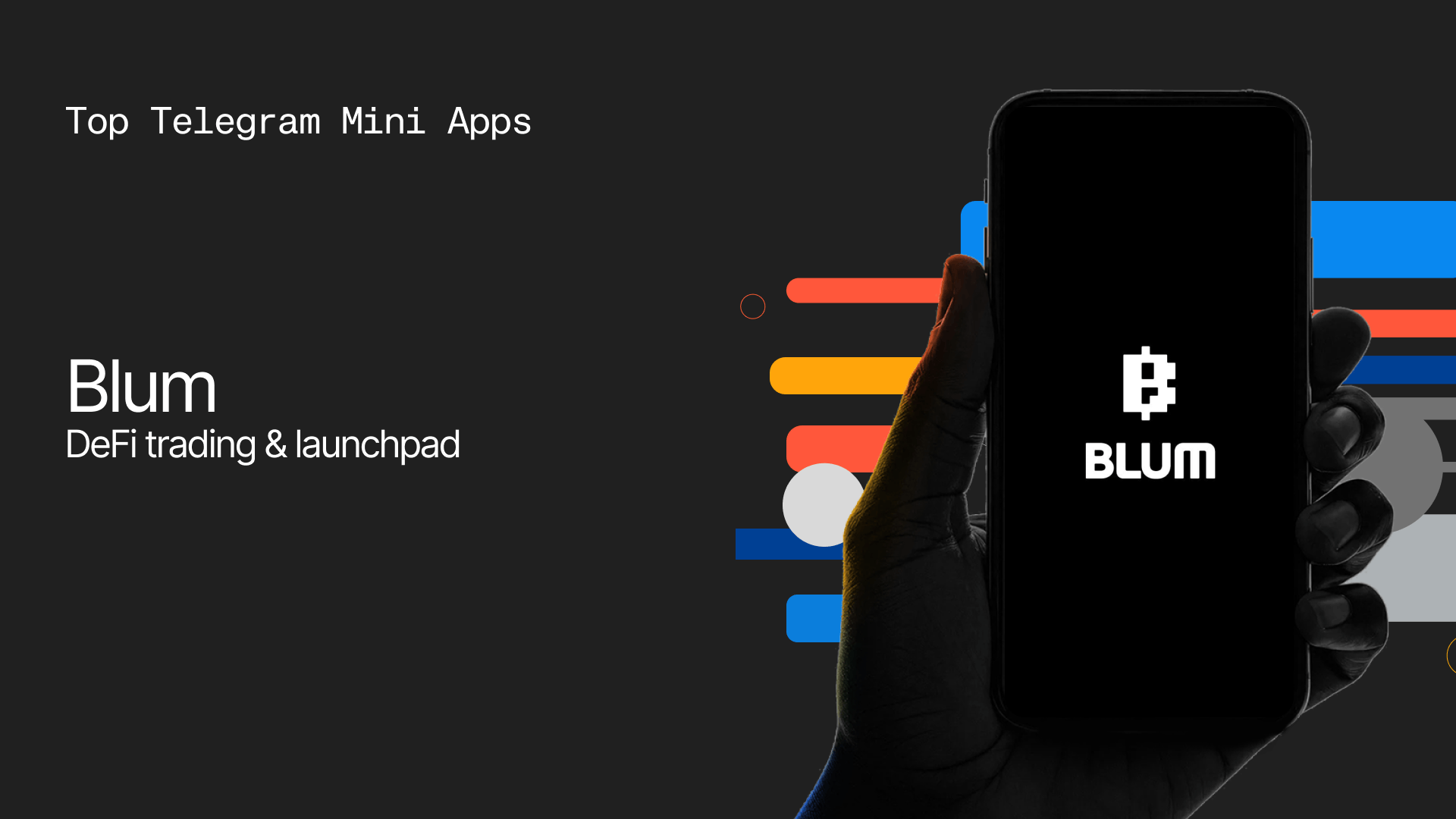
Blum is a DeFi launchpad built entirely into Telegram. Users swap tokens, launch memecoins, farm points, and tap into trading strategies without leaving the chat, with no browser wallet or private key juggling required. With around 43 million monthly active users and support for dozens of chains, Blum has become one of the centers of Telegram-native DeFi.
What developers can learn: Blum's strength is removing the usual DeFi friction. There are no seed phrases to copy or extensions to install before a user can act. If you are building anything that touches trading or token movement, the lesson is to make the wallet and transaction layer disappear into the flow. Reown's wallet connection and payments tooling on TON is designed for exactly this kind of low-friction, in-context experience.
2. Notcoin
Category: Tap-to-earn social game
Notcoin turned a single tap into a viral movement, letting players accumulate points that later converted into real tokens through quests and team challenges. It grew past 35 million users and triggered one of the largest token launches in the TON ecosystem, becoming a template that later Mini Apps studied closely.
What developers can learn: Notcoin proved that simplicity and timing beat complexity. Its onboarding asked almost nothing of the user upfront and layered in Web3 mechanics only once people were engaged. The takeaway is to defer complexity: let users experience value first, then introduce wallet connection and ownership when they are ready to claim something real.
3. Hamster Kombat
Category: GameFi, tap-to-earn
In Hamster Kombat, players run a cartoon crypto exchange as a hamster CEO, upgrading operations and earning rewards through taps, referrals, and puzzles. At its peak the game reached roughly 300 million users, though that has since settled to around 27 million active players. The HMSTR token is live and new content seasons continue to expand its reach.
What developers can learn: Hamster Kombat is a lesson in both directions. Its sticky daily loop and meme-driven brand show how to build habit, while its steep decline from peak shows how fragile attention is when the core loop wears thin. Plan for retention beyond the launch spike, and give users durable reasons to return once the novelty fades.
4. Catizen
Category: GameFi, merge game
Catizen pairs cozy merge gameplay with blockchain incentives: players merge cats to unlock rare breeds, earn CATI tokens, and join seasonal events. It reports over 34 million total users, around 7 million daily active players, more than 30 million on-chain transactions, and over 2 million wallets, remarkable retention in a churn-heavy genre.
What developers can learn: Catizen shows that emotional design and genuine daily engagement can produce real onchain activity, not just point farming. Its millions of wallets and on-chain transactions came from gameplay people actually enjoyed. If you want real usage, make the rewarding action fun in its own right, then let the chain record it. A smooth wallet layer is what turns that engagement into wallets created.
5. X Empire
Category: Tap-to-earn strategy game
X Empire (formerly Musk Empire) gamifies influence and strategy through a satirical lens, letting players build empires and compete in timed events for rewards. It has brought in more than 36 million users and helped onboard over 18 million TON wallets, a strong example of a Mini App doubling as a wallet-growth engine.
What developers can learn: X Empire's standout number is wallets created, not just users entertained. It treated wallet creation as a natural step in progression rather than a barrier. The lesson: design your reward moments so that connecting or creating a wallet is something the user wants to do to advance, not a chore imposed on them.
6. Major
Category: Social-gamified Web3
Major turns everyday social behavior into tokenized value. Players earn Stars by chatting, completing tasks, and solving puzzles, which feed into rankings and rewards. With over 70 million total users and roughly 40 million monthly actives, it has become a leading lifestyle app in Web3, with its MAJOR token integrated across the TON ecosystem.
What developers can learn: Major shows the power of rewarding participation rather than speculation. Value is earned gradually through consistent engagement, which builds a broad and durable user base. If your app has any social or community dimension, consider tying rewards to genuine participation over time rather than one-off actions.
7. STON.fi
Category: DeFi / DEX
STON.fi is the quiet engine behind much of TON's on-chain economy. As a Telegram-native decentralized exchange, it enables swaps, liquidity provision, and yield farming directly in chat, integrating smoothly with wallets like Tonkeeper. It has grown to over 4.7 million wallets and processed more than $5.8 billion in cumulative swap volume.
What developers can learn: STON.fi wins on reliability rather than hype, and it has become default infrastructure that other apps build on. The lesson is that being the dependable layer others plug into can be a more durable position than chasing viral spikes. Solid execution on the fundamentals, swaps that just work, wallet support that just connects, compounds over time.
The Future of Telegram Mini Apps
The seven apps above tell a consistent story. The winners on TON are not the ones with the flashiest mechanics; they are the ones that made connecting a wallet, signing in, and moving value feel effortless, then gave people a reason to come back. As stablecoins like USDT settle onto TON and the ecosystem's 650-plus dApps mature, the bar will keep rising from "can we go viral" to "can we retain and transact."
For developers, that shifts the hard problem away from distribution, which Telegram largely solves, and onto the connection and payment layer, where users are actually won or lost. This is where Reown fits. Reown provides wallet connection, authentication, and payments on TON, so your Mini App can onboard a first-time user, connect their TON wallet, and let them transact without the friction that costs other apps their audience. You also get analytics to see exactly where users drop off, so you can act on it.
If you are building the next standout TON Mini App, start in the Reown dashboard and add TON support using the TON network docs.